Dear Struggling Artist – Some Words of Encouragement
Dear Struggling Artist,
You write of your anxiety, your fears, your uncertainty about your calling. Wondering if the artistic life is even right for you, or realistic, or doomed to be one of constant struggle. You ask if it’s worth it, if you should heed the advice of all those who “love” you and just get a normal job, with normal pay, “job security” – as they call it.
You wonder if you can do this thing. If you’ve done it once, or twice, or ten times, you wonder if you can do it again. Whether you’re good enough (what is enough, anyway?) and if you’ll have what it takes. You want to know if you can count on this life to sustain you and worry that there’s just too little chance of “making it” or “losing it.” And so your heart beats a little faster with fear. You lie awake at night worrying about making ends meet, distrusting yourself. You see everyone elses’ work and theirs all looks so much better, younger, in vogue, desirable. You look at what you haven’t accomplished, your unfinished drafts, the auditions you couldn’t bring yourself to do, the ones you lost, the successes you’ve had, the next great big vision that seems so very far from reach or reality (which is it?) – and you wonder if it’s worth it.
Shouldn’t it get easier the longer you practice your craft? Shouldn’t you be in a better place by now? Shouldn’t you be beyond lying in bed worrying about the same damn things?
No. You shouldn’t. And you know why?
Because you’re human. Because the artistic life is a journey and the cold hard truth is you never “arrive.”
All the success in your field will never equate to security. It’s the nature of life – expansion. It’s the nature of art.
There is no top of the mountain. You. just. keep. climbing.
So, in response, dear struggling artist, I would tell you: keep going. Pause and breathe when you must, but don’t stop. Keep climbing. Keep going back to the keyboard, the audition, the next script, the next possibility. Keep letting yourself dream. Keep believing. Keep trusting that the Universe hasn’t brought you this far just to drop you now.
Because it hasn’t. You’re here, right where you are, no matter where you are – beginning, middle, end of a career- for a reason. You’re exactly where you are “meant” to be.
So breathe. Relax. Trust. You’re called to be an artist. To live this life as a creator. Don’t get to the end of your life wishing you’d taken more chances, believed in yourself more, changed your thoughts about what is possible.
Keep climbing. You’re worth it.
On a Writer’s Isolation, Environment and Being Different
Writing requires solitude. How do you deal with the isolation that comes from the hours of work that take place between you and a screen?
A writer’s isolation is really a workspace. Because it’s in that mental solitude where you interact with characters, listen, and engage with the Story itself. So, when we talk about isolation, we need to remember that it’s not a negative aspect, but one of the essentials of our craft. That said, isolation can feel lonely. Because for months to years, you alone live with the Story, the characters, you know the ins and outs of it, you experience this whole world that no one else yet has. And that lends itself to a sense of feeling alone, because it’s not a shared experience. You can share your writing with those close to you, if you wish, but you cannot share the experience of writing it. And even amongst other writers, you alone know the path you have walked. No two writers ever share the same path. We can gather and discuss shared aspects, but the experience of writing the Stories you are entrusted with, will always be yours alone.
One word about sharing and writer’s groups. I would caution writers to protect their work until the Story is mature enough to defend itself. Otherwise, you open yourself and the Story up to opinions and influences that may not be right for you as a writer or that particular story – which results in needless agony and wasted revision. (Don’t get me wrong, all Stories need revision – but they need guided revision – first by the characters themselves; second, by professionals who know what they’re talking about; and third, by your own sense of writer’s instincts. And this should come when the work is mature enough and you know it well enough to be objective about the feedback and able to discern what you should and shouldn’t accept. Because you shouldn’t accept all of it.)
But back to isolation. I don’t think writers ever need to be “lonely.” Alone, yes. You do need to be alone, at least mentally, to write. But “loneliness” comes from feeling a sense of separation. And it stems not from writing, but from your social and personal life. You need to nurture your own life before you can ever expect to truly nurture a cast of characters. Your life is what you make it. There are people out there who would love to get to know you. If you’re lonely, it’s because you are not taking the initiative to connect with people and bless them with the opportunity to love you.
How about environment? Do you think it shapes a writer’s work? How does it influence you?
It does. In many ways. We are shaped by our surroundings and environments growing up and influenced by our current environments on a daily basis. Does it affect the Stories we write? It affects the writer and in a way, shapes that writer’s capacity to “be a container” for Stories and communicate them authentically. Aspiring writers often want to explore “new worlds” – ones that are opposite than what they grew up with – and probably need to do so for awhile for their own inner development. But once you’ve come around back to yourself, you know that the greatest strength you have lies within your own sense of place and being. And it’s cumulative – from your experience during this present lifetime and all the past ones. So you find that the Stories and Characters that choose you, do so primarily because you are you. It’s what you bring in terms of consciousness, awareness and knowing, that allows you to write the stories you are chosen to write. And characters don’t chose a writer arbitrarily. They have very good reasons for picking you and trusting you with their vulnerabilities.
Can you write a story that is set in an environment you know little or nothing about? Yes. Will it ring with the cultural authenticity and inherent recognition that comes from having experienced that environment? No. Can you introduce new worlds that have not been revealed before? Yes, but that’s another topic.
Another aspect is whether or not a writer’s current environment shapes his or her writing. It can influence the writer and how you go about your writing, but it doesn’t necessarily shape the Story itself. I’ve worked on the same story for extended periods of time while living in both rural and urban settings. The story remained true to itself. I, on the other hand, experience different aspects of support, inspiration and comfort in each setting. I am nourished in different ways, and find that my spirit is most at home surrounded by the calm, soothing, resilient presence of nature. That’s me. That’s where I’m from.
Writers are often seen as “different,” sometimes reclusive. How can we embrace our “differences” to empower our work?
Writers are seen as different because we are different. We deal on a regular basis with the Unseen World. And to do this, we have to be receptive and aware to realities that many people do not have the blessing to become aware of during their lifetimes. Are we born with this perceptive ability? I believe so. It is in some ways, a psychic ability. Many, if not most, writers have introverted personalities. And in American society, “introverted” has often been considered less desirable than extroverted. But when you think of it, writers are usually perfectly designed to be writers. We’re typically listeners, observers, comfortable with less socialization, don’t mind time to ourselves, sensitive, and attuned. Granted, we can also be worriers, perfectionists, take things far too personally and wrestle mightily with self-confidence and trusting ourselves to take command of our stories. But we’re different, not in an egotistical way, but a very positive one, because we are born as writers.
Born as writers? Really? Can’t anyone learn how to write?
That is the perception out there, isn’t it? Writing is taught in school, so anyone can learn it, right? You can learn how to write coherently, structurally, with proper grammar. But you cannot learn talent. You are born with a talent for writing, just as some painters are born with the talent to paint. It’s not a learned gift. It’s an inherent one. The ability to receive, nurture, develop and translate stories and characters from the unseen realm to the page is a gift you are born with. That said, all writers have to learn craft – the structural, formatting, technical aspects of writing. The “tools” of the art.
People often think, “if you are born as a writer, it must be easy, right?” Some aspects do come more naturally than others. But every writer worth his or her salt, struggles. We wrestle with it. Not all in the same way, but there is dedicated effort, victories, defeats, setbacks, and a continual turmoil – surprisingly, often not in the actual writing, but in the decisions, the self-trust, the discernment about whether or not you’re translating the Story right and most effectively, if the characters are pleased, if you’ve “gotten” them correctly, if you’ve honored them well, and if the audience will receive the same story you have.
But isn’t a writer’s life supposed to be glamorous?
That’s the rumor, isn’t it? I’m not sure what it’s supposed to mean. Do we have more luxury? Work less? Enjoy more freedom? Some of us do. Well, I’m not sure you can say “work less” – because most writers put in long, long hours and even when we’re not typing, we’re thinking about the story. But when you do something that comes natural to you, it doesn’t feel like work. So, if that’s what you mean by “work less,” than yes. Being a writer isn’t any different than being any other occupation. You do the work. You get paid.
I think the myth of glamour comes from the idea that being a writer is a sure road to fame and fortune. And that’s not an accurate portrayal of most writers’ experience. It’s certainly not the reason born writers write. If you’re a born writer, you write because it is who you are, you are most fulfilled – despite the struggles – when you’re writing, you can’t imagine life without it. That’s why it doesn’t feel like work. It’s aligned to your spirit and brings you a remarkable sense of joy.
Update on Mark Staufer’s The Numinous Place – The Evolution of Storytelling
 ‘The Numinous Place’ is the world’s first truly multidimensional work of fiction – technology and creativity merge harmoniously to create a uniquely experiential new medium. Every aspect of ‘The Numinous Place’ feels chillingly authentic…From realistic news reports and video to genuine documents, articles, diagrams, photographs, websites and phone calls; readers will believe they are witnessing actual events unfold, as they immerse themselves in a discovery that will change the world forever. And, the powerful narrative moves beyond the screen into the real-world and beyond with an interactive element that has only ever been dreamt of before. – thenuminousplace.com
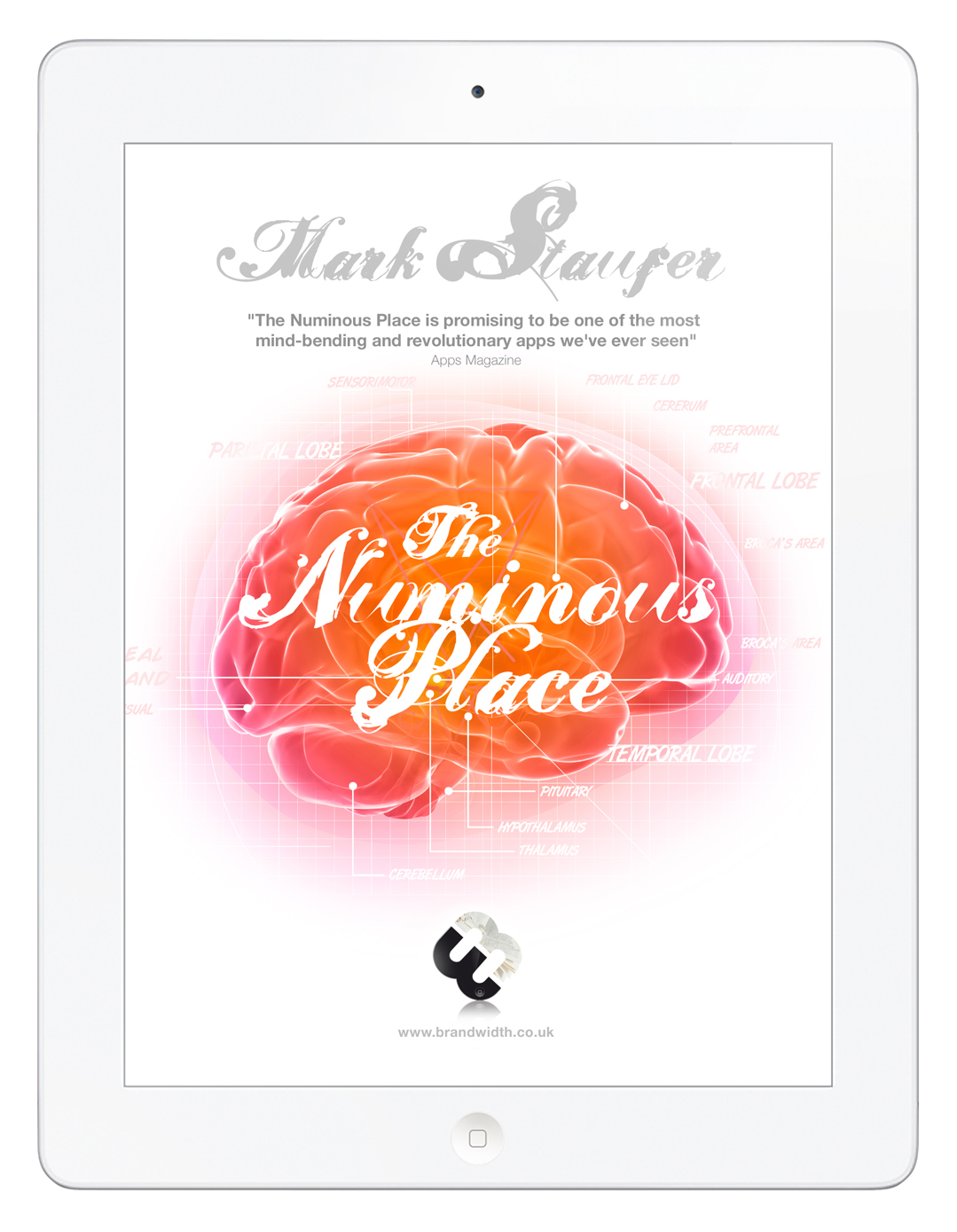
Hollywood screenwriter, Mark Staufer, recently unveiled the prototype for The Numinous Place. I caught up with Mark, and Dean Johnson, VP of Innovation at Brandwidth, the firm who designed and developed the app, to see how things are proceeding for this emerging franchise that is generating a lot of buzz.
Mark, you unveiled the TNP prototype and introduced it to the world at the Frankfurt Book Fair. How was it received?
The Frankfurt Book Fair was like the second moment of truth for The Numinous Place after Kickstarter. With nearly every major publisher and more than 300,000 (yes—Three. Hundred. Thousand) industry professionals in attendance, this was the best possible launch-pad for us. We were confident we had the goods, but with so many people, I was concerned we might get buried. I was also worried I was skiing way off-piste—I know Hollywood and how it works, the world of books is a different animal: impenetrable, haughty, somewhat hidebound. And The Numinous Place is so different from what they’re used to. I was anxious I was turning up at a cat show with a platypus. But, you know, I’ve always believed this is my destiny project, and that our time had come, and in the end everything conspired brilliantly. I’m overwhelmed by the response.
Dean, how was it from your perspective?
The positive response in the US, at the Frankfurt Book fair and back in the UK has been quite overwhelming. It really does feel as if the audience is ready for someone to raise the bar. Six months ago, this wouldn’t have been the case.
Without giving away trade secrets, how did Brandwidth adapt technology to meet Mark’s vision? What was the greatest challenge?
It’s all about the seamless narrative as we are still primarily catering to readers, not viewers or gamers. They don’t want interactive content to break their reading experience and obstruct the well-written text. Our audio enhances, video is contained within the key text and interaction occurs as a result of the narrative, not in spite of it. The secret is to produce an app where the technology is recessive, not excessive. Mark understood all this so the text and the tech met in the middle.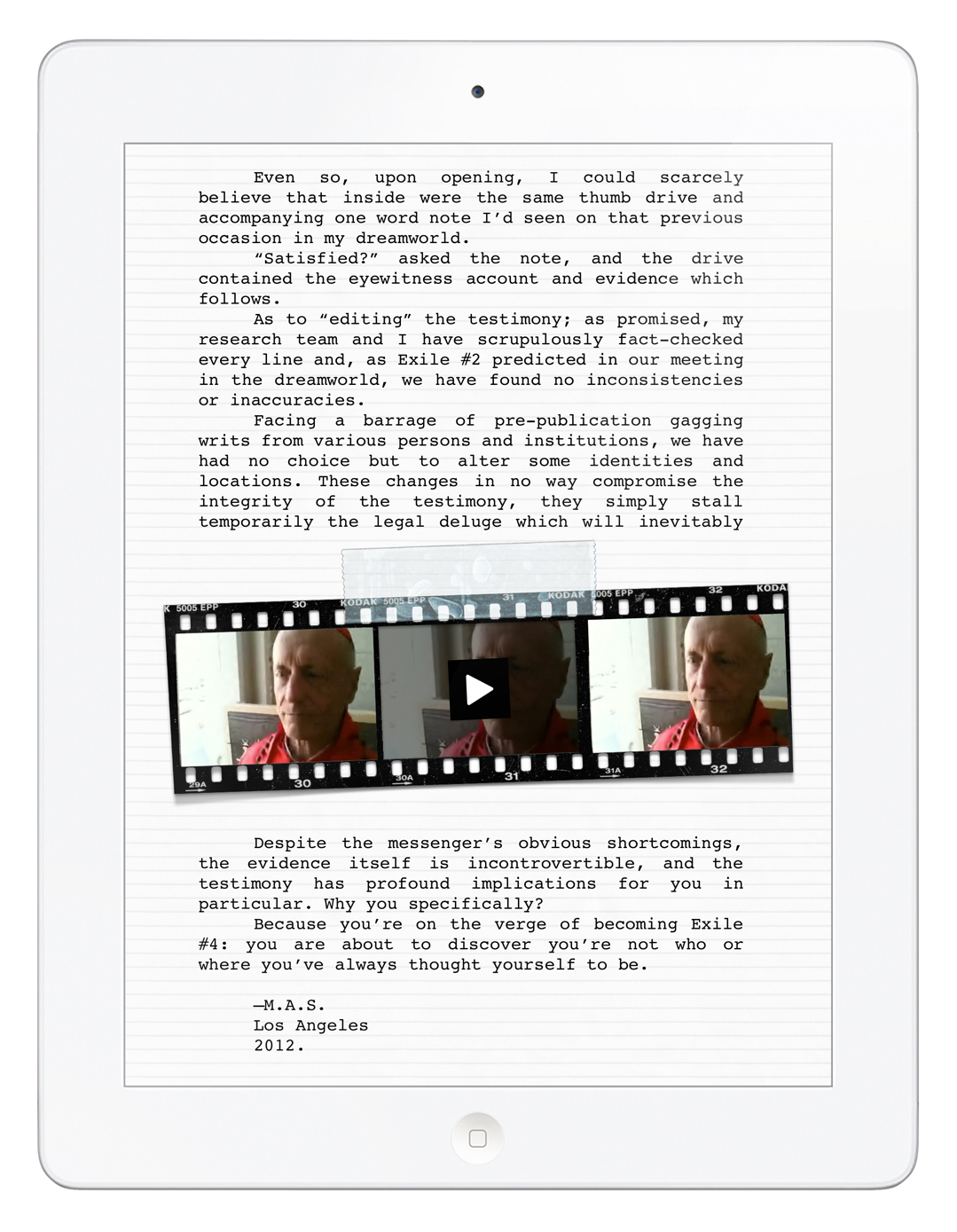
How much of a “stretch” has TNP been for Brandwidth?
Brandwidth works with some of the largest global brands to select, design, develop, market and maintain great digital content. The end product takes many shapes on the most appropriate platforms – from Enterprise-level websites, apps, iBooks, 3D and gestural screen technology to the future of Smart TV.
That sounds a little dry, but when our clients include publishers, music labels, TV and film studios, automotive manufacturers and museums with some incredible raw materials, we love bringing this stuff to life and engaging our audience. TNP wasn’t unfamiliar, but presented an interesting challenge.
One of the misperceptions I see in this type of work is that collaboration within publishing just exists for licensing deals and a client/supplier relationship. The Numinous Place wouldn’t have existed without genuine teamwork across an incredibly diverse set of disciplines, from writer, musician and dream expert to designer, developer and marketer.
Dean, what do you see as technology’s role in facilitating Storytelling? What should writers be aware of as they approach new work?
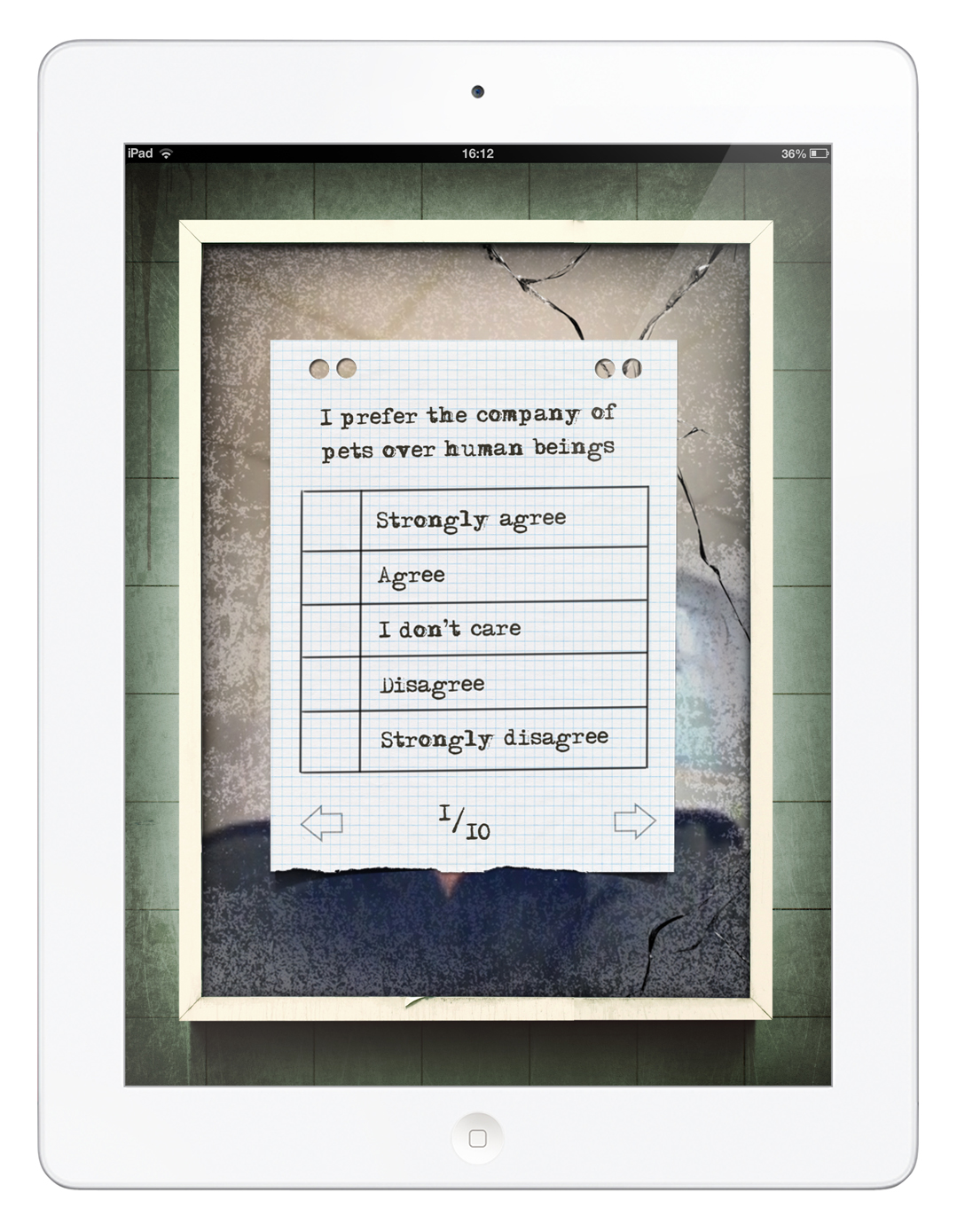
Apps allow us to push the boundaries, and Apple’s platform in particular caters to the highest possible denominator, rather than the lowest. Transmedia projects are employing gaming and multiplatform (and multi-reader) participation with mixed results. There’s a great opportunity to appeal to a different audience with these elements but not necessarily a familiar readership. Too much interaction can be a distraction, but I envisage future developments taking the story beyond the book, with online and electronic billboards continuing the narrative between reading sessions. Well, perhaps not that far in the future.
Authors should be aware that there’s a whole bunch of bells and whistles available. Throw everything at your readers and you’ll soon find you’ve lost your audience. I would advise them to write with technology in mind, rather than adding the digital experience as an afterthought.
 Excellent point. Mark, what did you want to accomplish during your time in Frankfurt? Did you meet those goals?
We were confident that we had a really great story to tell, even so, we were telling that story in a way like never before and the publishing industry isn’t renowned for radical forward thinking and risk-taking. Also, attracting a publisher for the e- and print-book parts of the puzzle was just part of it. We also needed investment for the four app-book versions which would allow us to release and market them, and hopefully begin developing the game, and screen adaptation. We ticked all the boxes.
That’s wonderful. Did the Universe open any different opportunities beyond what you had imagined while you were there?
As always, the Universe had much more in store than my mere imaginings. I met some wonderful people, who I made a deep connection with, and the whole experience underlined my belief that you get back what you put out. The publishers and investors who came my way were the ones who got it, and if they didn’t at first, as soon as I showed them the magnificent prototype that Brandwidth designed, they got very excited. Showing works better than telling with The Numinous Place, definitely. I met a Brazilian writer and publisher, Francisco Pereira who offered support and guidance and will be my friend for life. And, after my presentation, author Jonathan Gottschall approached me. Gottschall is a bloody genius, by the way—check out his website, and if you’re a writer, or in business, or just interested in the immense power of story, you gotta get his book “The Storytelling Animal.” Seriously, buy it right now.
We evolve as our projects do. Mark, what changed in/for you during your time in Frankfurt?
I trust my intuition much more. It’s the most profoundly important sense/talent that we human beings possess, and it needs to be nurtured and tuned. The Numinous Place is a supernatural thriller, but it’s also a spiritual quest. The main character, Henry Meat, has insisted on certain narrative directions that I’ve sometimes fought against for writerly reasons. Even though my brain tells me that such-and-such should now be happening, Henry will fight me tooth and nail if it’s not the authentic story. Sometimes, I’m just not even sure where he’s taking me plot-wise, and I’ve put it down to luck when things work out in the narrative and it comes together. Now I realize that with Henry, and with life, you’ve gotta have faith and rely on your intuition. I’m also cognizant of the fact that I sound a little crazy with all this “Use the force, Luke” Sufi-stuff. Don’t take my word for it—dive in yourself: see if intuition and trust and honesty don’t improve your writing and your life.
How important is it for creatives to have faith and stay true to their vision during the development/financing/production phases of projects? Words of advice?
OK, so let’s talk about energy for a moment. The Dao, the Force, the Universe, nature, chi, the Field, prana, lung, the Gods—even if you’re a complete atheist like I used to be, and materialist science is the infrastructure within which you place your faith, at some stage you must let go. You must construct each of the phases of your creative endeavor to the best of your ability, and only when you are supremely confident that you’ve done your best, and the time is right, should you move onto the next one. And then, at some stage, when your intuition tells you everything is aligned—and you possess the energy necessary—shepherd it out into the Universe. The right people will find it, and they will help you.
I should add that, initially, when I sent the Numinous Place out into the Universe, it clearly was not the right time.I didn’t listen to my intuition, and about a year ago, I sent the manuscript and concept to more than 100 agents. The few replies I received were pretty dismissive. Even though they didn’t even read the manuscript, they didn’t see the vision and couldn’t understand what I was trying to achieve. Things have moved along now technologically, and for us as well—we’re still operating without representation which is clearly not an essential piece of this particular puzzle. I’m sure there are some big-thinking agents out there, the Universe just doesn’t believe The Numinous Place needs one at this point, and maybe other creatives need to approach their work in such a way. The old ways are not always the best ways.
That can be so true. We really do need to start looking at our work in terms of what will best serve the story and facilitate reaching the audience. We need to be courageous in being willing to be different. What’s next now for TNP?
Business stuff. Deals. Putting the pieces of the puzzle together—app, ebook, print-book, game, screen adaptation. Lots of meetings. I never thought I’d say this, but I’m looking forward to going back into the dark room and getting on with the writing side of things. Henry’s getting impatient. Luckily, I have good people around me who are handling the business side of things. But I should mention, our philosophy, even with business is much more “Bhagavad Gita” than “Art of War.”
Thank you, Mark and Dean. We’re looking forward to following TNP.
How BBC’s Wallander Changed How I Write
We are always being guided.
When I just happened to turn on PBS a couple years ago to find BBC’s Wallander (which I had never watched before) coming on, I had no idea that it was about to change how I write.
(Note: BBC’s Wallander is a compelling series about a Swedish detective played by Ken Branagh – who has won a BAFTA TV and other awards for his performance in the series. I recently had the joy of interviewing Peter Harness, lead writer for Wallander Series 3 – you can read that here.)
To say there was something refreshingly different about how this crime drama was presented is an understatement. I was riveted.
Unlike most American crime dramas, you were not assaulted by a furious pace of brutality, blood, gore, and a predictable A to B to C race to solve the investigation. The audience was given time to think and absorb the story without it ever once losing momentum. Branagh gave a poignantly engaging performance with a depth of character not often seen in TV crime dramas. The story was set amidst stunningly beautiful landscapes where nature’s tranquility sharply contrasted against the pain and gruesomeness of Wallander’s daily life.
The writers, directors, producers and actors honored not only the audiences’ intelligence, but also the character’s integrity. They told a story about a man and didn’t manipulate him for plot or convenience. What came through was authenticity. Something the human spirit always recognizes and responds to.
Three things hit home:
1.) You can use nature as a powerful “third” character to juxtapose pain against well-being.
2.) You can completely captivate an audience, even when the character is just sitting in a chair, worrying over his vulnerability, when you allow the character to be fully himself.
3.) You can elevate any story when you focus on creating something visually and emotionally beautiful that resonates with the human spirit.
That afternoon proved to me that what I envisioned as a writer was possible to achieve. It inspired me to let my characters have their way, to trust them fully, even when what they want to do story-wise may prove unconventional. It reminded me, too, to always seek to elevate a story – any story – to its highest realm, to reach deeper into the human heart.
Would I have discovered these concepts if I hadn’t turned on the TV that afternoon? Maybe.
But I’ll forever be grateful to the entire creative team on BBC’s Wallander for lighting the path for me.
Meet Peter Harness, Screenwriter for BBC’s Wallander
Two years ago, on a rainy summer afternoon, I just happened to turn on PBS to find Masterpiece Theater coming on. The feature that day was an episode of BBC’s Wallander, a compelling series about a Swedish detective played by Ken Branagh (who has won a BAFTA TV and other awards for his performance in the series).
That afternoon changed how I write.
It was my great joy this fall when screenwriter Peter Harness, the lead writer on Wallander Series 3, graciously agreed to be interviewed. He has some great advice, insight and a story to share.
Peter, tell us your story. How and why did you become a screenwriter?
I don’t know, really. Looking back, I think that I’ve always been in love with television as an art form, and that when I started thinking about writing, it was probably always with the ambition of writing for TV in mind. Along the way, I think I did theatre and (bizarrely) even film as an alternative, but really my love has always been television. To be honest, I feel I was raised by TV, and I owe it a debt. A lot of my education and my view of the outside world came through my TV screen when I was growing up: in factual programming, comedy, children’s television, and drama. When I graduated university, I half – or three-quarters – completed a doctorate about Dennis Potter (pretty much the English TV dramatist of the 60s and 70s), which I abandoned when I coincidentally won something called the Dennis Potter Screenwriting Prize for TV drama. So, I guess I became a screenwriter because I wanted to work in television and to do homage to people like Dennis Potter who had shaped my understanding and my life, watching TV as I grew up. Dennis Potter died in 1994, and did a very poignant final interview, and I took tremendous inspiration from that, and wanted to continue what he had done.
How did you land the job on Wallander Series 3 and what about this project keeps you challenged/inspired?
I landed this job – I don’t know, after several years of working in UK TV and film, doing bits and pieces and seemingly getting not particularly anywhere. This was, in fact, the first job (aside from those odd ones that I’d pitched myself) that I didn’t need to compete or do an interview for. This was the first job that I was actually offered. And that felt fantastic. It was very nice that the producers had read and seen my various efforts and felt that they’d like me to do Wallander. And I was even more delighted to discover that they’d decided to do that before they found out that I actually live in Sweden, where Wallander is set.
What is it that keeps me challenged or inspired? You ask a lot of big questions, you know that? Uch. I don’t know. I wrestle with that character, Wallander. He’s a difficult bugger to pin down and he’s not very cheerful to spend time with. But I guess it’s his honesty and his humanity and his relentless appetite for making the same mistakes which makes me want to see him through. And the fact that I’m going to get rid of him in a year or so.
What have you learned about fear and faith in your creative journey? How do you deal with them?
I think that the fear and faith element of the job falls into two categories. The first is the choice that one makes to become a writer in the first place – if you can call it a choice. For some people it’s a need, it’s a compulsion, a sense of vocation, for others, it just happens by accident when they’re doing other things. But somewhere along the line, you make a choice between being someone who wants to write, or who dabbles a bit, and actually being a writer. Because everyone wants to write. So many people come up to me at parties and say that they really fancy knocking off a novel or a screenplay. But the difference between me, and any professional writer, and them is the commitment. I tend to reply, if I’m drunk or bold enough, that “if you want to write, resign from your job, forget your pension scheme, get rid of your car, fuck your mortgage, and certainly forget all about success.” Because if you’re prepared to do that, if you can live with crippling uncertainty, and the terrible ultimatum that you absolutely have to make it as a writer, because you’ve fucked up every other means of earning a dollar that you can possibly think of, then maybe you can give it a go.
There have been times in my life when I have mourned my prospects and my fortunes very badly. But I’ve never doubted my decision. It was the right choice to make, and I went in with my eyes open. You can fail miserably at this, you can be penniless, you can crash and burn. And you can be a success. But even if you are a success, you’ll probably still have similar doubts and paranoias.
Secondly, and perhaps more optimistically, one of the most important things you need to develop as a writer is an ability to negotiate between self-confidence and self-criticism. It’s very easy to have too much of either one, and you need to keep them balanced if you want to get anything decent done. It can be very hard to keep hold of the good stuff about your work when it’s being rejected and criticised and having dozens of notes thrown at it all the time – it’s a long process to learn which criticism to trust and which to take with a pinch of salt. So, with all the rejection and with all the self-criticising one ends up doing, it’s easy to be too down on yourself. Conversely, however, it’s easy to be too enamored of your own stuff. It’s easy to ignore other people’s input. It’s easy to fall in love with words, phrases, stories or characters that you should be getting rid of. Successful writing is reaching a place where you’re finely balanced between all of these things, and you’re being honest with yourself about your work and how good or bad it is. It’s not an easy place to get to, and most of us are only temporary residents there.
Besides screenwriting, do you write in other formats? Novels, etc.
Not at the moment. I have written plays in the past and would like to do so again, and I’d also like to try and write a novel one day, but screenwriting is where my brain and my talent (such as it may be) is just now.
What is most challenging to you in the creative process?
That’s a difficult question. One of the things I most enjoy about writing is the constant challenges is sets up for you, and the various structural or character-based problems that writing any story forces you to face and to solve. So in a way, the traditional “challenges” of storytelling don’t feel like challenges for me, because (usually) I find them reasonably enjoyable and engaging. I suppose if we’re talking about “challenges” in terms of things that I find difficult or unpleasant, then it would be some of the elements that are inherent in the life of most writers. I find it difficult to discipline myself to write every day; I find the solitariness of it a bit of a pain sometimes; and I find the grind-work of drafting and redrafting (between the joy of starting a new project and the relief of finishing it) hard to handle sometimes. And of course, there’s the nag of self-doubt and the worry about where it’s all going in general. I’m also rubbish at hitting deadlines, and I find that fact very stressful.
What brings you the most joy?
I love being a writer: I’m thankful that I can earn my living doing something that I enjoy, in a job that means I can be my own boss, choose my own projects, and manage my own time. I love being in production on any given project. I like the collaborative aspects of getting something made and shot. I love the exhilaration of starting work on something new; I love the rush you get when you know you’re writing good stuff; I love being on the home stretch of a project, when things are finally starting to drop into place, and it’s clear that it’s going to turn out okay; and I love having finished something that I’m proud of, and holding it in my hand, whether it’s a wad of papers, a book or a DVD. And sometimes, though by no means always, you’ll be doing something that you’re just so immersed in and in love with that you can’t tear yourself away from it, that you can’t wait to get back to, that your mind is always half on it when you’re doing other things. At those times, the exhilaration of writing is unbeatable, like the crazy, consuming passion of first love.
What do you wish other people knew about your work as a screenwriter?
I think a lot of people are baffled as to what a screenwriter actually does: the overriding impression seems to be that the director or maybe the actors make up the story as they go along. People often seem to think that I maybe just write the dialogue or even (in the case of Wallander) just translate the novels into English. I’m never particularly offended by this from people who don’t work in the business – after all, I don’t especially know how a sheet-metal worker or a quantity surveyor goes about their job – but occasionally, the attitude persists in reviews or on sets, and I do find that a bit galling. What I’d like people to know is that the screenwriter tends to write pretty much everything that ends up on screen: structures the story, invents the characters, decides and describes the locations and action, and writes all the dialogue. That they create the world and the story that you see.
What is the most helpful advice you would give other screenwriters?
That’s a very big question. Very tough to boil it down to a couple of pieces of advice, as the tips I might give to those just starting out are very different to those I might offer to someone with more experience. Some vague maxims:
- Don’t be tyrannised by other people’s advice.
- Don’t get in the way of yourself.
- Get stuff finished.
- The best way to write interestingly and to avoid cliché is to be truthful.
- In a screenplay, there’s no place for any line, scene or character that doesn’t have a specific purpose.
I guess that’s what I’ve got. Until I write my book on how to be a screenwriter, which will be longer and probably more explanatory.
How do you know when a script is “done”?
I think you just know. You develop an instinct for it. Often, you think that a script might well be “done” when you’ve added or subtracted this or that specific thing, and then you find that you’ve uncovered a whole new other level of stuff that needs to be addressed. It goes on and on. But I think I feel that a script is done when I’ve exhausted all the other possibilities, and ended up on what I think is the best way to tell the story; when I’ve dotted all the eyes and crossed all the tees and I know why every single word of it is there.
Based on your experience, what do actors need from a writer? What can writers do to make an actor’s job easier, characters more accessible?
I used to do quite a lot of acting, and I think that an understanding of acting and an actor’s process helps in creating actable characters. Actors need to know how and why their characters make their choices. They need to be able to make sense of how their characters behave. I think the best that writers can do is to write truthful characters, who behave in a truthful way, according to their own lights. That gives actors the security they need to work. Also, writers should try their best to write dialogue that any real person would actually say.
Let’s talk about Wallander which is based on Henry Mankell’s novels. The BBC version has a strong reverence for silence, a slower pacing and incorporates a sharp contrast of natural beauty against violence/crime. None of this is written in the novels. Where did this idea come from?
I disagree with the idea that it’s somehow slower paced. I think the scripts that I’ve done for Wallander have much more action and move a lot quicker than anything else I’ve written. They’re very lean and there isn’t room for anything that doesn’t move the story along: and I certainly don’t write silences or brooding moments in just for the sake of it, or just to add flavour. There’s a lot of progression and incident in every ninety minute film. However, I totally appreciate that the series has more silence and maybe feels more thoughtful than a lot of other TV. I think this probably comes from the fact that we try to think as cinematically as possible, so we do cut as much unnecessary dialogue as we can, and we do tend to think strongly in terms of visuals. And so maybe it stands out as unusual in the television landscape. As far as the contrast of natural beauty versus violence, well, I think it’s a visual representation of a theme which is very much there in the novels, i.e., the notion of a “perfect” society (which Sweden, in some ways, sees itself as) somehow being corrupted and blemished by inexplicable violence and degradation.
How, as a writer, do you write “silence” and “slower pace” into a script, yet still keep the tension tight?
By making sure that you earn every single moment of silence and every single pause for breath by making the rest of the story so tight and tense that the viewer needs those little breaks every now and again to bed down what has just happened or to take in the impact what they’ve just seen has on a given character. You have a precious few of those moments to spend on any given script, and they have to justify themselves.
How much collaboration goes into the final script? How much does Branagh and the other actors weigh in on the writing?
It depends. Ken had more suggestions on the earlier scripts because I think I was still getting to know his interpretation of the character. Once I’d gotten comfortable with that, we were very much on the same page, so I think he had fewer notes. Of course, there’s quite a degree of collaboration with the producer and the various directors, and there’s a lot of conversation so that we feel we share a common understanding and vision for each film. The late stages of writing a script, just before you start shooting, when you’re refining it and honing it alongside the other members of the creative team, are some of the times that I enjoy my job most and find it the most fulfilling.
In the past, Mankell has mentioned his surprise with how much was stripped away to tell the Wallander stories in the BBC version. As a writer adapting material, how do you determine what to strip away from the original work and how much to include? How much leeway do you feel to create a new story and veer away from the original? What do you hold sacred and unchangeable?
I think what Henning Mankell likes about the BBC version is that it is so stripped down – at least, that’s what he’s said to me. He likes the economy of the storytelling and the precision of the film-making. That being the case, I feel that I’m trusted by the original writer to honour his work, and so have a lot of leeway to change and create if I think it’s necessary. Also, the three stories for the most recent series of Wallander all necessitated fairly big changes for different reasons. The first was based on a fairly brief short story; the second was very definitely set in a Cold War environment and needed reimagining for the present day; the third didn’t really feature Wallander as a central character. So they were always going to diverge from the originals anyway. Basically, I feel that I can make whatever alterations are necessary to make the story work as a film. I tend to ring-fence the most memorable set-pieces and characters from the books, and work them back into the story in whatever way I can; because what I do hold sacred is the principle that the adaptation should feel like the book. It should be a similar experience for the viewer as it was for the reader. That even if many of the details of the story and the character end up being different, I should always honour the spirit of the book and the original author’s intention, in so far as I can understand them.
Mankell’s Wallander has been done several times by other production companies. Were you focused on making this version fresh? What did you not want to do in this version?
I didn’t watch the other Wallanders because I didn’t want to be influenced by them. I think each of the separate adaptations has carved out its own take on the character and the way to tell his stories. I guess I was focused on making this version fresh, but primarily because it was the third series of this particular Wallander and I wanted to give the character new challenges and journeys and to move him into new territory. I wanted it to feel like progression and not repetition. So I think most of the anxiety of influence came from the BBC series itself.
Wallander gives the viewer time to absorb the emotions that Branagh is so skilled at portraying, and it really is the story of a man first, a detective second. Each episode is a revelation of the character’s inner life as it evolves against the backdrop of a crime. Screenwriters are told to have conflict in every scene, to never have a “slow” scene – but what you have done works and works beautifully. Is that because the audience is most invested in Wallander the man? Why does it work? How do you see it?
I think audiences are invested in Wallander because the films are about him. Because his character and the emotional journey that he goes on is the story, and everything else is tied into that and informs that. If you start from the assumption that character leads plot, and not the other way around, then your audience will invest in your character. The only reason that a scene is ever “slow” is because it doesn’t move the story along in some way. You can have scenes in which a character just sits in a room and doesn’t move, but which are the most compelling in the film because they’re somehow key to the whole story. Similarly, you can have a million dollar action sequence that flags and feels boring because it doesn’t move anything along. I don’t think it’s right that one has to have conflict in every scene, and I don’t think it’s especially good advice. What every scene does need is dramatic purpose and a dramatic progression, and some element of dramatic tension, which doesn’t have to come via traditional “conflict.”
Let’s talk about characters. I recently wrote a blog post on how characters seem to exist whole and know their story long before a writer gets involved. When the writing flows, it seems more like channeling than “creating.” Is this your experience, too?
Yes. In a lot of ways it’s a process of discovering your characters and getting to know them. They almost always take on a life and a voice of their own. And once you get to know them well enough, it does become like channeling. Which can cause problems, because sometimes you really want a character to do or say something which they end up stubbornly resisting. But then they’ll surprise you by doing something you didn’t expect which takes the story in much more interesting directions than you could have imagined before you got to know them.
You have a full cast of characters – ones I’m sure you know well by now. Does that make it easier or harder to write the next episode? Do the characters still surprise you?
I think it makes it easier because as long as the challenges they face are new ones, they’ll continue to react in new and interesting ways. I’m always trying to find situations which might open up a different aspect of their personalities. And yes, like I said, they do surprise me.
What have you learned most from working on Wallander?
I find that I learn a lot from every project I get involved in. And this has been by far the biggest, in terms of time, length and work, so I’ve learnt all sorts of things. I think I can now tell quite a good crime story, which I’d never tried doing before. But I feel I’ve also learned a lot about economy of storytelling, and how to bind character to story as closely as possible.
Will there be more Wallander episodes? What’s next for you?
All being well, yes, there will be another series of three films sometime over the next couple of years. But it’ll be the last, and that’s been the plan all along. Next for me is a new six episode series for BBC1, which is very different to Wallander and which I’m really excited about and really enjoying writing. Can’t give details yet, but it’ll be quite crazy and different and it’s scheduled to start shooting in about nine months. And then hopefully a long rest and some thinking time to dream up something new.
 creative inside out